What Causes a Basement to Flood in Toronto?
Foundation Waterproofing Toronto has answered GTA flood calls for 25+ years, and every flooded basement in Toronto traces back to one of three mechanisms. Confusing them is how homeowners spend five figures solving the wrong problem.
Sanitary sewer surcharge. The city main fills during heavy rain and reverses into the lowest fixture in your house. The evidence is water coming up through the floor drain, the shower, or the laundry tub, often discoloured. The fix is a mainline backwater valve. Report the backup to 311 as well, so Toronto Water can check the city side of the connection.
Hydrostatic pressure. Saturated clay soil pushes ground water through the cove joint, cracks, and block cores. The evidence is clean water appearing along the base of the walls and the slab edge, usually during spring thaw runoff or after sustained rain. It is common in the post-war bungalows of Etobicoke, North York, and Scarborough, and in the century semi-detached and row houses of the old city. The fix is drainage: interior weeping tile to a sump, or exterior replacement.
Surface flooding. Water arrives at grade and enters through a window well, a basement entry, or an area where the ground slopes toward the house. The evidence is entry at a specific above-slab point, often where a downspout disconnected from the sewer now discharges against the foundation wall, and it is often the cheapest of the three to correct, through surface flooding grade downspout work and window well drainage.
A fourth situation is not really a cause but a failure: sump failure or an overwhelmed weeping tile system that was working until the storm outran it. The evidence is a pit full to the rim with a pump that is silent, seized, or unpowered, and the fix is a replacement Zoeller or Liberty Pumps sump with a battery backup and high-water alarm.
Sewer Backup, Ground Water or Surface Flooding: Compared
| Cause | Evidence at the scene | Permanent fix and cost |
|---|---|---|
| Sanitary sewer surcharge | Discoloured water up the floor drain, shower, or laundry tub | Mainline backwater valve, $2,000 to $4,500 CAD |
| Hydrostatic pressure | Clean water at the base of walls and slab edge, tracks thaw or sustained rain | Interior weeping tile to a sump, $8,000 to $18,000 CAD |
| Surface flooding | Entry at a specific above-slab point, a window well or a basement entry | Grading, downspouts, and well drainage, $900 to $6,000 CAD |
| Emergency diagnostic | Any of the above, before the repair decision | Written diagnostic with photos and measurements, $299 to $499 CAD |
What Happens When You Call the Emergency Line?
Dispatch is triaged by severity. On the phone we ask three questions: how deep is the water, where is it coming in, and is it near any electrical. That determines the arrival order during a regional storm when every basement on a street is calling at once.
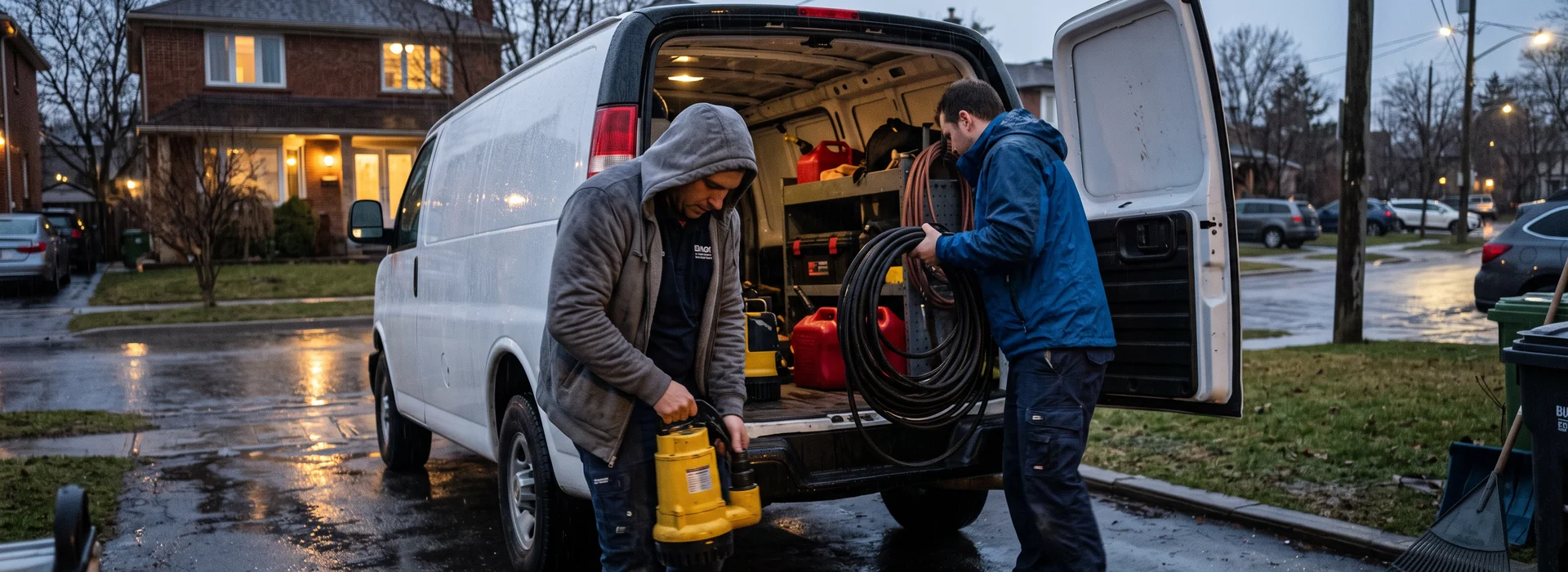
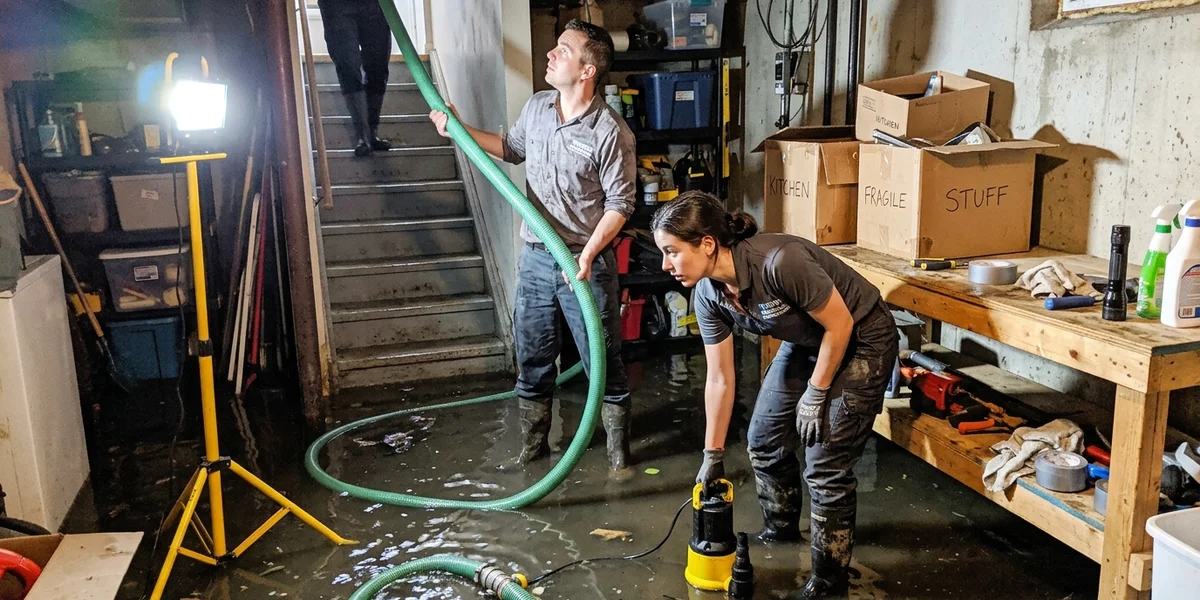
On arrival, safety comes first. If water is near outlets, the furnace, or the panel, circuits get shut down before anything else happens. Then portable pumps and hose go in and the active water comes out.
Only then does diagnosis start: floor drain inspection, cove joint inspection, moisture reading across walls and slab, exterior grade and downspout check, and a camera scope of the sanitary lateral where the evidence points that way.
The Written Flood Report Your Insurer Will Ask For
You are paying $299 to $499 CAD for a document, not just for the pumping. It records:
- The water level and the affected area, photographed and measured for your insurance adjuster.
- The cause, named specifically, with the evidence that supports it.
- The permanent repair options, with the CAD band for each one from our published pricing.
- The subsidy amount available where the fix involves a sump pump or backwater valve.
That document is what lets you make the repair decision the next morning with a clear head, and it is what your insurer will ask for.
Why Does My Basement Keep Flooding After Every Storm?
Toronto’s sewer network and the drainage systems in its older housing stock were built for a rainfall pattern that no longer applies. Extreme storm runoff events that used to be rare now arrive several times a season, and the combined sewers under older neighbourhoods such as East York, Leslieville, The Junction, and York reach capacity quickly when they do. The July 2013 and July 2024 storms each left thousands of Toronto basements under water.
That is the reason the City subsidises backwater valves and sump pumps rather than simply telling homeowners to wait for infrastructure upgrades. If your basement flooded once, the honest assessment is that the conditions that caused it will recur, and the only variable you control is what stands between the water and your floor.
How We Compare
| What you get | Typical provider | Foundation Waterproofing Toronto |
|---|---|---|
| Response | Pump-out when a truck is free | Same-day GTA dispatch, triaged by severity |
| Cause | Water removed, cause not confirmed | Cause named in writing: sewer backup, hydrostatic pressure, or surface water |
| Pricing | Quoted on site during the emergency | Diagnostic $299 to $499 CAD, every repair band published |
| Insurance | Invoice for pumping | Written report with water level, photos, and affected area |
| Subsidy | Homeowner files alone | Up to $3,400 CAD filed for you as a registered contractor |
| Warranty | Terms vary by contractor | 25-year transferable warranty on interior weeping tile |
After the Water Is Out: Mitigate, Diagnose, Waterproof, Restore
The sequence that works is: mitigate, diagnose, waterproof, then restore. Drywall and flooring should go back only after the waterproofing repair is complete and tested, otherwise the next storm takes out the new finishes as well as the old ones.
Foundation Waterproofing Toronto handles the water, the cause, and the foundation waterproofing. Structural drying and finish restoration usually run through a restoration contractor, and we coordinate the order of operations so nothing gets closed up over a problem that is still live.
If your basement is flooding now, call the dispatch line. If it flooded last week and you are still deciding what to do, book the free in-home inspection and get the cause in writing before the next storm answers the question for you.