Engineering Coordinated

Concrete Foundation Repair Toronto: Bowing Wall Stabilization

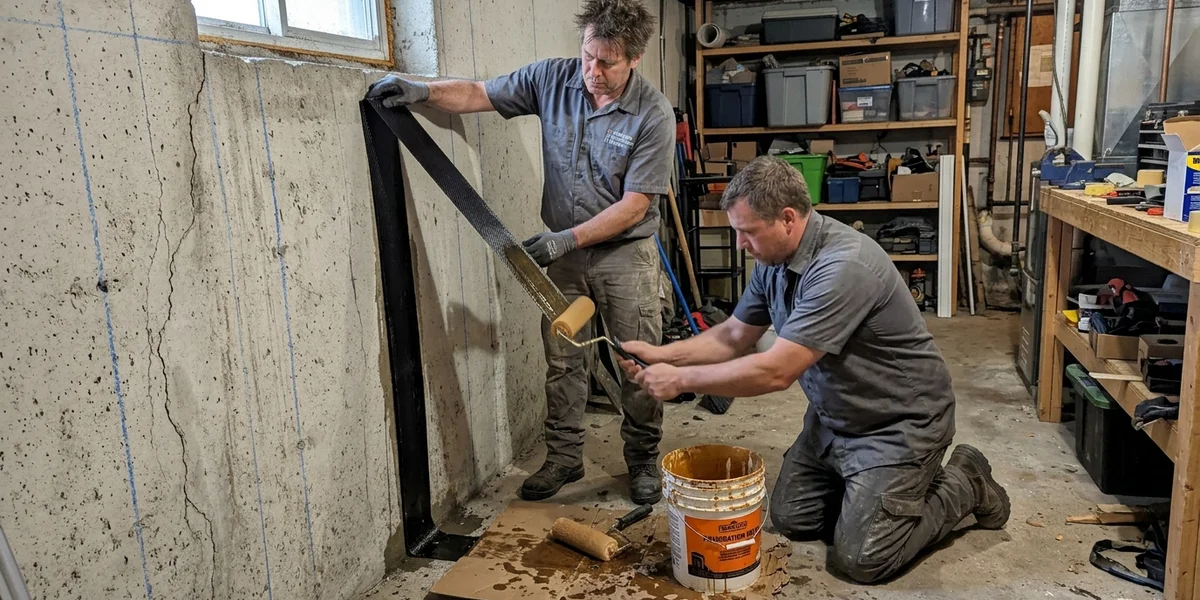
Foundation Waterproofing Toronto crew bonding carbon fibre straps to a bowing foundation wall in a Toronto basement
Assessment, stabilization, repair versus rebuild STRUCTURAL REPAIR

Foundation Waterproofing Toronto provides basement waterproofing, foundation crack repair, sump pump and backwater valve installation, and interior and exterior weeping tile systems throughout Toronto, ON, backed by 25+ years of experience under Ontario Building Code Part 9.

Foundation Waterproofing Toronto provides concrete foundation repair across Toronto and the GTA for structural problems in poured concrete, concrete block, and rubble stone foundations: horizontal cracks, bowing walls, settlement, and deteriorated mortar. With 25+ years of GTA foundation work, we measure the wall, coordinate a structural engineer where the Ontario Building Code requires one, administer City of Toronto Building Division permits, and cost repair versus rebuild in writing with published CAD ranges before any work begins.

Scope CAD cost anchor

In 2026, interior structural epoxy injection runs $700 to $1,800 CAD per crack. Carbon fibre or steel reinforcement on a bowing wall is $4,000 to $15,000 CAD depending on wall length, and a full foundation rebuild with waterproofing is $30,000 to $80,000 CAD. The in-home inspection is free.

  • 25+ years experience
  • OBC Part 9 compliant
  • Free in-home inspection
  • Workmanship warranty by scope, engineering stamped

Diagnostic Inspection Request

Free in-home inspection with a written diagnostic, anywhere in the Toronto GTA.

Prefer to talk now Call (647) 254-5110

  • 25+ Years Experience
  • Same-Day GTA Emergency Response
  • Written Workmanship Warranty
  • OBC Part 9 Compliant
  • Up to $3,400 CAD Subsidy Filed

Is Your Foundation Problem Structural or a Water Leak?

At Foundation Waterproofing Toronto, we treat foundation cracks as two different problems that share a symptom. A crack can leak without threatening the wall, and a wall can be structurally compromised without leaking at all. Concrete foundation repair deals with load: the wall’s ability to resist the soil pressing against it and carry the house above it, whether that is a Victorian semi-detached in Riverdale or a postwar bungalow in North York.

The distinction matters financially. Water repair on a leaking shrinkage crack is $500 to $1,200 CAD. A single interior structural epoxy injection is $700 to $1,800 CAD per crack, and a horizontal bowing shear crack that needs reinforcement starts at $4,000 CAD with a stamped engineering design. Selling one as the other, in either direction, is the most expensive mistake in foundation repair.

Most structural jobs also have a water component, so we price the foundation repair and the basement waterproofing as separate line items in the same written assessment.

What Moves a Foundation Wall in Toronto Clay

Lateral soil pressure. Saturated clay expands. The Halton Till and old lakebed clays under much of the Greater Toronto Area hold water through the spring thaw, and on a wall with no reinforcement, that pressure concentrates near mid-height and produces the classic horizontal crack, often at the mortar joint in a load-bearing concrete block CMU wall.

Foundation settlement. Water erodes fines from under a footing, or a mature tree draws moisture out of the clay on one side of the house. The footing drops unevenly and the wall cracks diagonally from the nearest opening. Settlement that is still active is corrected with underpinning, which carries the footing down to stable soil under an engineered design and a Building Division permit. Settlement that has stopped usually needs only crack repair and drainage.

Frost heave. Shallow footings, porch piers, and garage slabs in Toronto sit closer to the 1.2 metre frost line than the main house footings do. Freezing soil lifts them, spring thaw drops them, and the cycle opens joints.

Material deterioration. In the old city, rubble and stone foundation walls bound with soft lime mortar lose their binder over a century, which is why we see it most in the pre-1930 houses of Cabbagetown, the Annex, and Leslieville. The stones are fine. The mortar is not.

Carbon Fibre, Steel Beam or Rebuild: Repair Options Compared

These are 2026 CAD rates.

ScopeCost in TorontoWhen it is right
Structural epoxy injection with exterior membrane repair$2,500 to $6,500 CADLoad-bearing crack in otherwise sound poured concrete that passes through to the soil face
Carbon fiber reinforcement straps$4,000 to $10,000 CADBowing under roughly 25 mm deflection, stop further movement, leave a flat wall
Steel I-beam reinforcement$6,000 to $15,000 CADLarger deflection, or where the engineer specifies mechanical anchoring and possible correction over time
Lime-mortar repointing and rebuild$6,000 to $25,000 CADRubble or masonry wall with failed mortar but sound stone
Section or full rebuild$30,000 to $80,000 CADThe wall material itself has lost section and cannot be restored

We install Fortress Stabilization Systems carbon fibre where that product is specified, and steel where deflection or the engineer’s design calls for it.

How Is a Bowing Wall Measured Before Repair?

The number that matters most is deflection: how far the wall has moved from plumb over its height. We measure it with a straight edge and record it, along with crack widths and any face offset, in the written assessment. Where the wall needs reinforcement or underpinning, the structural engineer designs from those same numbers, so the permit drawings and the quote describe the same wall.

This gives you two things. First, a defensible basis for the recommendation rather than an opinion. Second, a baseline. If you are not repairing immediately, re-measuring the same points in six months tells you whether the movement is active or historic, and active movement changes the urgency entirely.

Why Structural Work Comes Before Waterproofing

Structural work comes first, drainage second, finishing last, every time.

Reinforcing a wall and then excavating beside it for exterior weeping tile and membrane, or installing interior weeping tile and then chipping the slab edge for a steel post footing, means paying for the same work twice. On projects where both are needed, we scope them together, sequence them properly, and price them as separate visible line items so you can stage the spend across two seasons if that suits you better.

How We Compare

What you getTypical providerFoundation Waterproofing Toronto
PricingQuoted only after a site visit$2,500 to $80,000 CAD structural bands published on this page (2026 pricing)
DiagnosisVerbal opinionDeflection, crack width, and offset measured and recorded in writing
Engineering and permitsLeft to the homeownerStructural engineer and City of Toronto Building Division permit coordinated and itemised
Repair versus rebuildOne option quotedBoth options costed in writing, rebuild only where the material has failed
WaterHandled as a separate job laterDrainage scoped together and sequenced after the structural work
Track recordUnstated25+ years, WSIB registered, $2M liability insurance

When Your Foundation Does Not Need Structural Repair

We turn down structural jobs regularly. A hairline vertical crack in a twelve-year-old poured wall in a Vaughan or Markham subdivision is curing shrinkage and needs nothing structural. A stable diagonal crack with no offset and no change over two measured visits is historic movement that has already found its equilibrium. Doors that stick in August and close fine in February are responding to humidity, not the foundation.

The free assessment exists to tell you which of these you have. If the answer is that nothing structural needs doing, the Foundation Waterproofing Toronto report will say so, and we will point you at the foundation waterproofing Toronto drainage work that will actually change your basement. We assess structural foundations across the GTA, from Scarborough and East York to Etobicoke and Mississauga.
Diagnosis

6 Signs Your Foundation Wall Needs Structural Repair

Most foundation cracks are cosmetic or a water problem. These six indicators are the ones that move a wall into structural territory, where injection alone is not the answer.

  1. 01

    A horizontal crack across the wall

    Horizontal cracking means lateral soil pressure is bending the wall inward. It is the clearest structural warning a basement wall gives.

  2. 02

    Measurable inward deflection

    Hold a straight edge against the wall. A visible bow, or more than roughly 25 mm of deflection over the wall height, needs reinforcement rather than filling.

  3. 03

    Stair-step cracking in block or brick

    Cracks following mortar joints in a diagonal staircase pattern indicate differential settlement or lateral load, not curing shrinkage.

  4. 04

    Doors and windows that stopped closing

    When openings on the floor above start binding at the same corner, the frame is moving with the foundation beneath it.

  5. 05

    Offset between the two faces of a crack

    If one side of a crack sits proud of the other, the wall sections have moved relative to each other. That is displacement, not a shrinkage gap.

  6. 06

    Crumbling mortar or spalling concrete

    Sections you can dig out with a screwdriver have lost strength. On rubble and lime-mortar walls this is slow deterioration that eventually becomes a load problem.

Our framework

How Our Structural Assessment Works, 5 Steps

Structural work runs on evidence, so the first half of this process is measurement and documentation rather than construction.

  1. 1

    Site assessment

    We measure crack widths, check deflection against a straight edge, look for offset, and inspect the exterior grade, drainage, and tree proximity.

  2. 2

    Cause analysis

    Lateral soil pressure, frost heave, settlement, water erosion under the footing, and material deterioration all look different. We identify which is driving the movement.

  3. 3

    Engineering where required

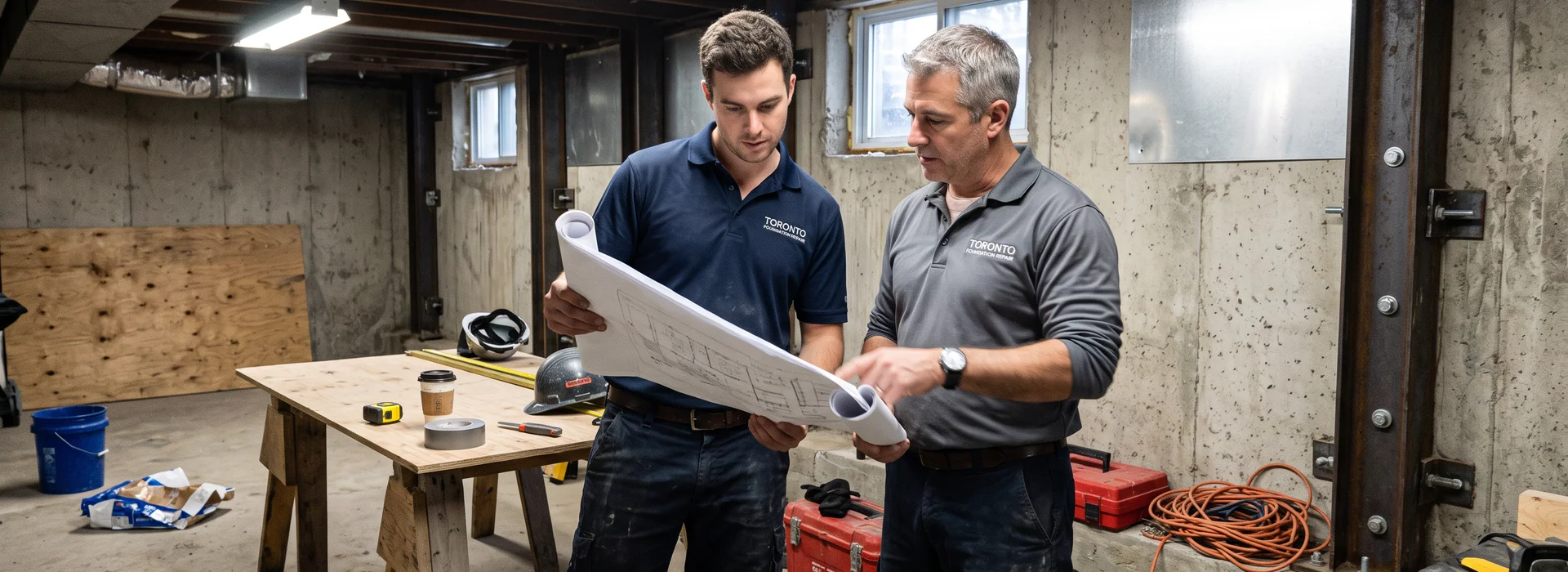
    Where the Building Division needs a stamped design, we coordinate a structural engineer and manage the drawing set.

  4. 4

    Repair versus rebuild in writing

    You get both options costed in CAD, with the reasoning, so the decision is yours and it is documented.

  5. 5

    Execute and verify

    Reinforcement, repointing, or rebuild is completed, the permit is inspected and closed, and the drainage scope follows.

Published CAD Pricing

How Much Does Concrete Foundation Repair Cost in Toronto?

Structural repair costs scale with how much load the wall has lost and how much access the crew needs. These are the published CAD bands. The assessment that tells you which band you are in is free, and where an engineer is required we quote that separately rather than burying it. These are 2026 rates.

Most requested

Structural Crack Repair

$2,500 to $6,500 CAD

Structural epoxy on load-bearing cracks, with exterior membrane repair where the crack passes through to the soil face. Interior epoxy injection alone is $700 to $1,800 CAD per crack.

  • High tensile strength structural epoxy
  • Exterior membrane patch where required
  • Written structural assessment included

Bowing Wall Reinforcement

$4,000 to $15,000 CAD

Carbon fibre straps or steel I-beam bracing along a wall showing horizontal shear or inward deflection.

  • Carbon fibre or steel selected by deflection measured
  • Engineer stamped where code requires
  • Permit administration included

Masonry and Rubble Restoration

$6,000 to $25,000 CAD

Lime-mortar repointing, parging, and localised rebuilding on stone and block foundations common in the old city.

  • Lime-mortar repointing matched to the original
  • Deteriorated sections rebuilt
  • Interior drainage usually paired with the repair

Foundation Rebuild With Waterproofing

$30,000 to $80,000 CAD

Section or full wall rebuild with new footing detailing, membrane, drainage board, and weeping tile.

  • Engineered design and permits
  • New exterior membrane and drainage
  • Quoted only when repair is genuinely not viable

Engineering fees, City of Toronto Building Division permits, and disposal are itemised separately on every structural quote.

Straight answers

What GTA Homeowners Ask Before Structural Repair

Is my house about to fall down?

Almost never, and we will tell you plainly if a wall genuinely needs immediate shoring. Most structural foundation problems in Toronto have developed over decades and need planned repair, not evacuation. The assessment includes measured deflection so you can see the actual number rather than react to the word structural.

Do I really need an engineer?

Not for everything. Epoxy injection on a load-bearing crack usually does not. Reinforcing a bowing wall, underpinning, or rebuilding a section does, because the Building Division requires a stamped design for the permit. We say up front which category you are in and quote the engineering separately.

Should I repair this or rebuild the wall?

Repair is usually the right answer when the wall is intact but overloaded, and rebuild is right when the material itself has failed. We give you both numbers in writing, and we have talked customers out of rebuilds more often than into them.

Will fixing the structure fix my water problem?

No, and any contractor who says otherwise is selling. Structural repair restores load capacity. Water still needs drainage, membrane, or injection. On most of these projects we scope both and sequence the structural work first.

Why us

Why Toronto Homeowners Choose Us for Concrete Foundation Repair

25+ Years of Foundation Waterproofing Experience

Two and a half decades across Toronto foundation types, from lime-mortar rubble in the core to poured concrete in Vaughan subdivisions.

Measured, Not Guessed

Deflection, crack width, and offset are recorded as numbers in the written assessment so you can track whether movement continues.

Engineering Coordination

We manage the structural engineer, the drawing set, and the City of Toronto Building Division permit as one package.

Honest Repair Versus Rebuild

Both options costed in writing. A rebuild is quoted only where the material has genuinely failed, not as a default.

Waterproofing Sequenced Correctly

Structural repair first, drainage second, finishing last. Doing it in any other order wastes the money you spend on finishes.

Published CAD Pricing

Structural bands published on this page, with engineering and permits itemised separately rather than hidden in a lump sum.

Our work

Concrete Foundation Repair Projects Across the GTA

Documentary photos from Toronto basements and foundation trenches. Select any image to enlarge.

Customer Feedback

What Customers Say About Our Concrete Foundation Repair

Verified project feedback from Toronto and GTA homeowners. Names are shortened for privacy.

Two contractors said our bowing wall meant rebuilding. This crew measured 19 mm of deflection, brought in an engineer, and stabilised it with carbon fibre for about $7,800 CAD. The engineer signed off and the wall has not moved since.
Beatriz I.Corso Italia
Our 1912 rubble foundation was losing mortar. They repointed with lime mortar rather than Portland, which the heritage consultant said was the right call, and added interior weeping tile afterward.
Karan V.Mount Pleasant West
They put both options on paper, repair at $11,000 CAD and rebuild at $54,000 CAD, and explained why the repair would hold. No pressure either way. We took the repair and it has been three winters.
Maureen X.Roncesvalles
Answers

Concrete Foundation Repair FAQs

How much does foundation repair cost in Toronto?
At 2026 rates, interior structural epoxy injection is $700 to $1,800 CAD per crack, and structural crack repair with exterior membrane runs $2,500 to $6,500 CAD. Bowing wall reinforcement with carbon fibre or steel is $4,000 to $15,000 CAD. Masonry and rubble restoration is $6,000 to $25,000 CAD, and a full foundation rebuild with waterproofing is $30,000 to $80,000 CAD.
How do I know if a foundation crack is structural?
Horizontal cracks, stair-step cracks in block, cracks wider than 1/4 inch, and any crack where one face sits offset from the other are structural indicators. Vertical hairline cracks from concrete shrinkage are not. We measure all of it during the free assessment.
What is carbon fibre foundation reinforcement?
High tensile strength carbon fibre straps are epoxy bonded vertically to the inside face of the wall. They resist further inward movement without the intrusion of steel beams, and they leave a flat wall that can be finished over.
When is a steel I-beam better than carbon fibre?
Steel is used where deflection is already significant, where the wall may need to be pulled back over time, or where the engineer specifies a mechanical anchor to the slab and joists. Carbon fibre stabilises, steel can also correct.
Do I need a permit for foundation repair in Toronto?
Structural repair requires a City of Toronto Building Division permit, and the permit application usually requires stamped engineering drawings. We handle the filing, the inspections, and the close-out.
Can a bowing basement wall be straightened?
Sometimes, using wall anchors or braced beams tightened over months while the exterior soil load is relieved. More often the practical goal is to stop further movement rather than restore the wall to plumb, which is why the engineer sets the objective before work starts.
What causes foundation settlement in Toronto?
Clay soil that shrinks and swells with moisture, water eroding fines out from under a footing, mature tree roots drawing moisture from one side of the house, and frost heave at shallow footings. The pattern of cracking usually points to which one.
Do old rubble stone foundations need rebuilding?
Rarely in full. Most rubble foundations in the Toronto core are repaired by repointing with a lime mortar compatible with the original, rebuilding deteriorated sections, and adding interior drainage. Full rebuild is reserved for walls that have genuinely lost their section.
Will my home insurance cover foundation repair?
Gradual settlement and deterioration are typically excluded from Ontario homeowner policies, while sudden damage from a covered peril may be included. We provide written documentation of cause and condition, which is what your insurer will ask for either way.
When does a foundation need underpinning?
Underpinning is needed when settlement is still active, meaning re-measured cracks keep widening, or when a footing sits on soil that has washed out from under it. It extends the footing down to stable soil and always requires a stamped engineering design and a City of Toronto Building Division permit. Settlement that has stopped usually needs crack repair and drainage instead.
What warranty comes with structural foundation repair?
Structural epoxy crack injection carries a 10-year written workmanship warranty. Warranty terms on reinforcement, underpinning, and rebuilds are set by scope and written into the quote before work starts. Interior weeping tile installed alongside the repair carries a 25-year transferable warranty.
How long does structural foundation repair take?
Carbon fibre reinforcement is usually one to two days. Steel bracing is two to four days. Masonry restoration is a week or more depending on wall length, and a rebuild is measured in weeks including engineering, permits, and excavation.

Still have a question about your basement

Book a free in-home inspection and we will answer it in writing, with the scope and the CAD price on the same page.

Book Free In-Home Inspection
Same-Day GTA Emergency Response

Get a written concrete foundation repair diagnostic for your Toronto home

Book the free in-home inspection and we confirm the water source, the scope, and the CAD price in writing before anyone picks up a tool.

  • Free in-home inspection with a written diagnostic
  • Published CAD pricing before any work starts
  • OBC Part 9 compliant, WSIB registered, $2M insured
phone_in_talk